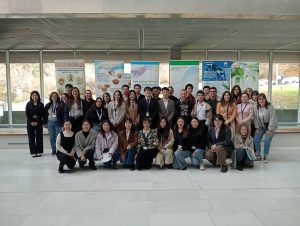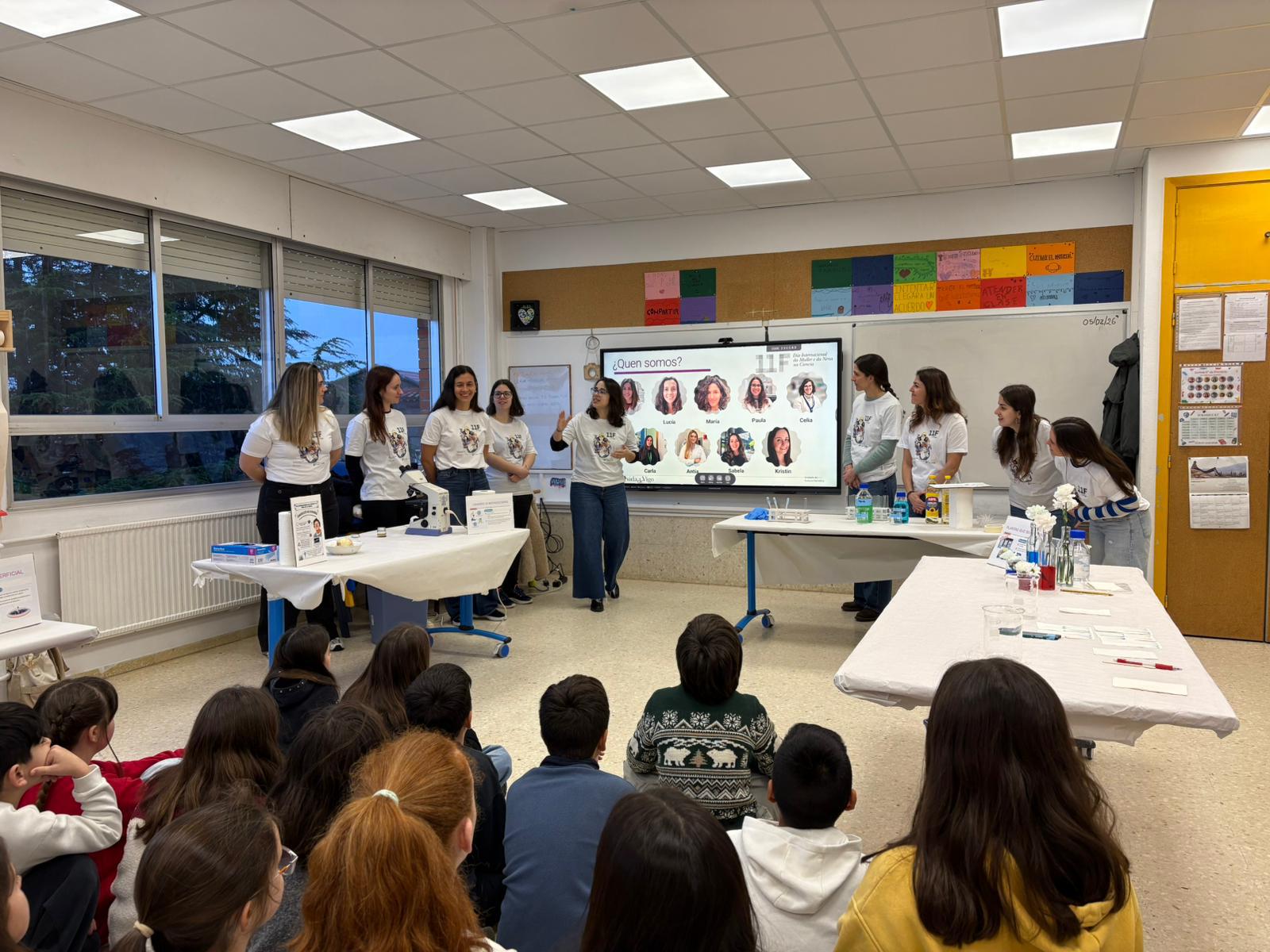
No marco da programación do 11 de Febreiro – Día Internacional da Muller e a Nena na Ciencia, as investigadoras do grupo AA1 sediadas en Ourense e Vigo levaron a cabo un taller informativo no colexio CEIP Josefa Alonso de Alonso de Vigo.
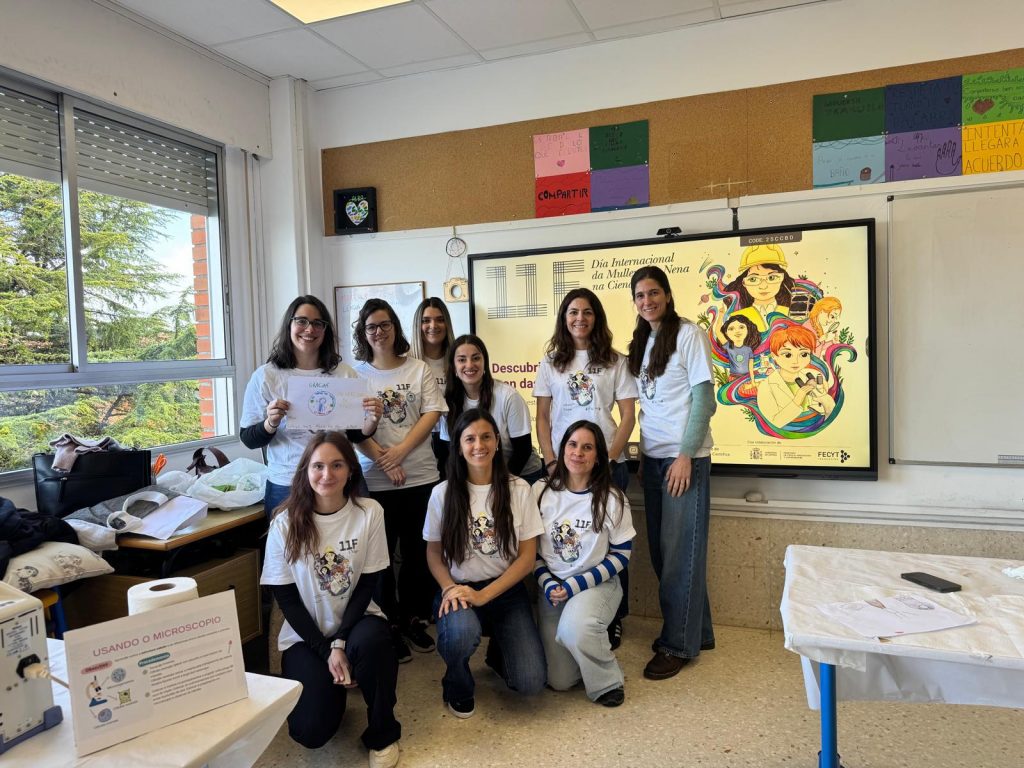
de pé, Dra. Paula García Oliveira, Dra. Celia Costas Sánchez, Antía Torres García, Sabela Fernández Sánchez, Dra. Paz Otero Fuertes, Dra. María García Martí;
abaixo, Kristin Klier, Dra. Lucía Cassani and Carla Cameselle Llanos.
O taller incluíu unha serie de experimentos científicos con crianzas entre os 10 e 11 anos de idade, nos que ademais se salientaron algúns dos maiores aportes de tres científicas cuxa pegada ten sido definitivamente significativa para o avance da ciencia e o progreso da sociedade tal e como pode ser hoxe entendida.
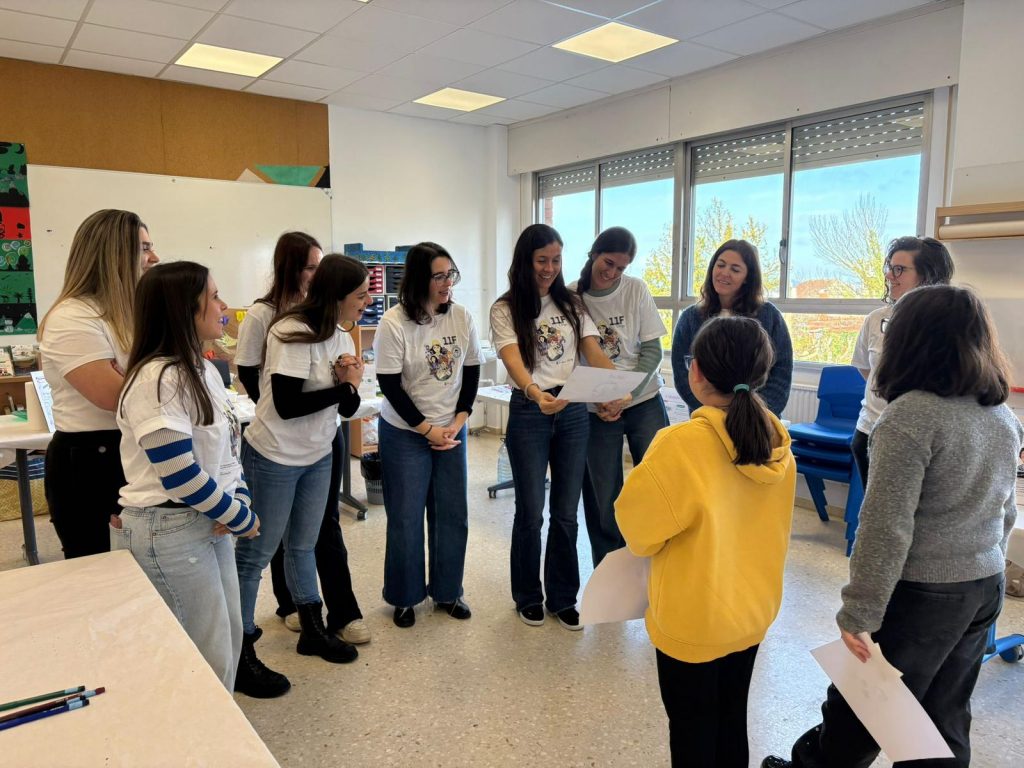
Alén de servir para despertar a curiosidade pola ciencia para todos os rapaces e rapazas, a visibilización do papel das nosas científicas e as contribucións destacadas poderán ter utilidade para inspirar ás cativas de hoxe a descobrer e perseguir a súa vocación pola ciencia.
Este tipo de iniciativas son enormemente valiosas non só pola posta en valor do papel da muller na ciencia, senón tamén polo agradecido que resulta traballar para un público que destaca polo seu entusiasmo, curiosidade e participación activa, alén de axudar a xerar novas vías de interacción entre a comunidade científica e o resto da sociedade.
Researchers from Group AA1 bring science closer to the CEIP Josefa Alonso de Alonso primary school
As part of the activities programmed for 11th of February – International Day of Women and Girls in Science – researchers from the AA1 group based in Ourense and Vigo held an informative workshop at the CEIP Josefa Alonso de Alonso school in Vigo.
standing, Dra. Paula García Oliveira, Dra. Celia Costas Sánchez, Antía Torres García, Sabela Fernández Sánchez, Dra. Paz Otero Fuertes, Dra. María García Martí;
below, Kristin Klier, Dra. Lucía Cassani and Carla Cameselle Llanos.
The workshop, targetted for children aged 10 to 11, included a series of scientific experiments showcasing some of the greatest contributions of three female scientists whose impact has been truly significant for the advancement of science and the progress of society as it is understood today.
Besides serving to spark curiosity about science in all kids, enhancing the visibility of the role of female scientists and their outstanding contributions can help inspire today’s girls to discover and pursue their calling in science.
These kinds of initiatives are enormously valuable not only for highlighting the role of women in science, but also because it is so rewarding to work for an audience that stands out for its enthusiasm, curiosity and active participation, as well as for helping to generate new avenues of interaction between the scientific community and the rest of society.