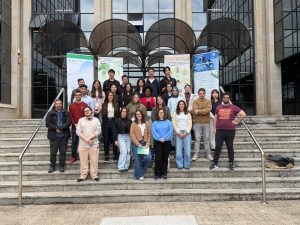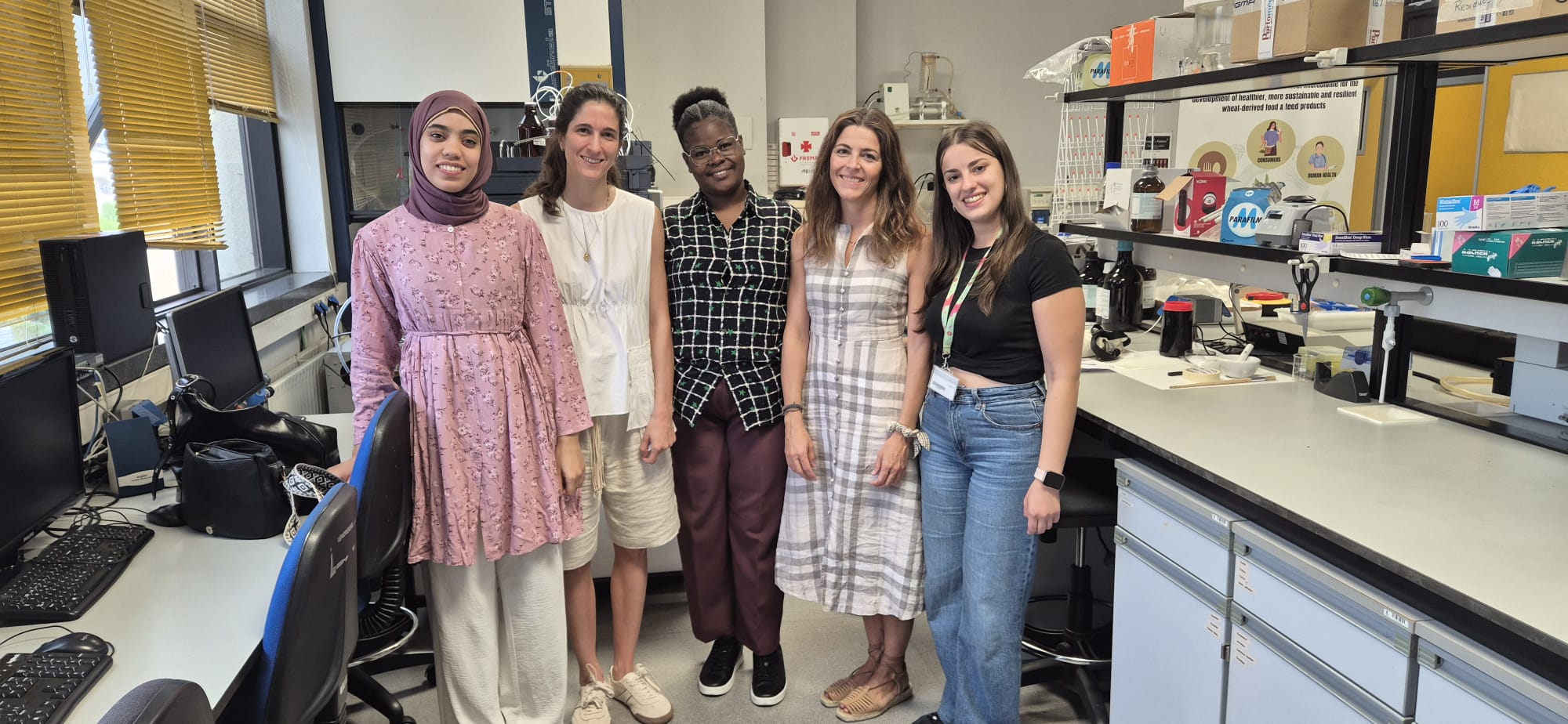
Hoy es un típico día de julio para los y las estudiantes de la etapa universitaria. Se acumulan las presentaciones de trabajos finales de Grado y Máster, el último paso antes de poder consolidar el conocimiento obtenido y alcanzar el tan deseado título. Sin embargo, para el Grupo de Investigaciones Agrarias y Alimentarias es un día aun más especial. Además de para varias estudiantes locales, este 23 de julio se finaliza con éxito la primera experiencia de colaboración del programa Learn Africa de la Fundación Mujeres por África.
El programa Learn Africa tiene como objetivo la promoción de nuevas oportunidades en los ámbitos de investigación académica y liderazgo para las mujeres africanas, reconociéndolas así como agentes esenciales en el desarrollo social de sus países de origen. El número de participantes desde los inicios del programa alcanza 462 estudiantes e investigadoras de diversos ámbitos estratégicos, como salud y nuevas tecnologías.
Este año, dos de las beneficiarias del programa – Vania Manuel Malimue, de Mozambique y Chaima Chakir, de Marruecos – han realizado sus respectivos Trabajo Final de Máster con nuestro grupo. Los trabajos se han titulado Caracterización nutricional de distintas variedades de trigo y el potencial de valorización de sus subproductos y Efecto de los sistemas de cultivo convencional, irrigado y ecológico sobre la calidad nutricional del trigo y sus subproductos, y se realizaron en el marco del proyecto Wheatbiome, financiado por el programa Horizon de la Unión Europea.
Hemos hablado con ellas para conocer sus impresiones sobre el programa, el trabajo con nuestro grupo y su visión en cuanto al intercambio cultural que ofrecen este tipo de alternativas.
Vania Manuel Malimue es natural de Mozambique y, como su compañera, ha realizado el Máster en Ciencia y Tecnología Agroalimentaria y Ambiental en la Universidade de Vigo. Se considera una apasionada por la investigación científica, especialmente en el ámbito de la seguridad alimentaria y la valorización de subproductos agroalimentarios. Preguntada sobre sus actividades favoritas, reconoce disfrutar de la lectura, el aprendizaje de nuevas habilidades y conociendo diferentes culturas.
Chaima Chakir es de Marruecos y también ha participado en el Máster en Ciencia y Tecnología Agroalimentaria y Ambiental en la Universidade de Vigo gracias a la beca del programa Learn Africa de la Fundación Mujeres por África. Al igual que Vania, se considera persona responsable, curiosa y apasionada por la investigación científica, también disfruta de «leer, descubrir nuevas culturas y disfrutar de la naturaleza». Cuando le preguntamos sobre qué aspecto le parece reseñable sobre el programa, destaca el haber podido conocer personas de diferentes países y compartir conocimientos y culturas.
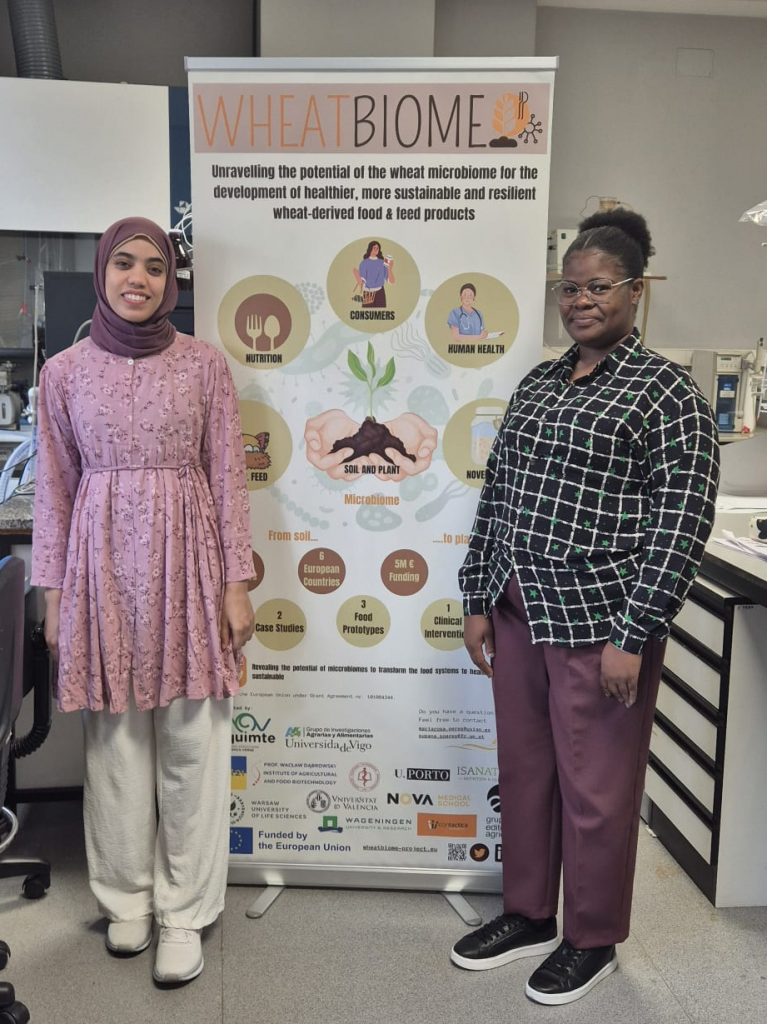
Hemos querido conocer sus impresiones sobre su participación en el programa Learn Africa y cómo es el día a día dentro del Grupo AA1. Aquí están sus respuestas*:
¿Cuál es tu formación académica?
V. Soy graduada en Economía Agraria por la Universidad Zambeze, en Mozambique. Actualmente estoy finalizando el Máster en Ciencia y Tecnología Agroalimentaria y Ambiental en la Universidade de Vigo, donde he ampliado mis conocimientos en investigación, análisis de alimentos y sostenibilidad.
C. Soy Ingeniera de Estado en Procesos Industriales y Medio Ambiente, obtuve mi grado en Marruecos. Mi formación me ha permitido adquirir conocimientos en tecnología de los alimentos, medio ambiente, control de calidad, análisis de laboratorio y sostenibilidad.
Actualmente curso el Máster en Ciencia y Tecnología Agroalimentaria y Ambiental en la Universidade de Vigo, donde estoy ampliando mis conocimientos en investigación aplicada al sector agroalimentario.
¿Cómo conociste el programa Learn Africa?
C. Conocí el programa a través de Internet mientras buscaba oportunidades de becas internacionales para continuar mi formación. Cuando descubrí la iniciativa Learn Africa me llamó mucho la atención porque promueve la formación de mujeres africanas en universidades de excelencia y fomenta el intercambio de conocimientos entre África y España.
V. Conocí el programa a través de la convocatoria publicada por la Fundación Mujeres por África. Me llamó la atención porque representa una excelente oportunidad para que mujeres africanas puedan acceder a una formación de calidad y fortalecer sus capacidades para contribuir al desarrollo de sus países.
¿Por qué elegiste nuestra universidad o nuestro grupo?
V. Elegí la Universidade de Vigo por su prestigio en investigación y por la calidad de sus programas de posgrado. Además, el Grupo AA1 desarrolla investigaciones innovadoras en el ámbito agroalimentario, lo que coincidía plenamente con mis intereses académicos y profesionales.
C. Elegí la Universidade de Vigo por la calidad de la investigación en el ámbito agroalimentario y ambiental. Además, el Grupo AA1 desarrolla investigaciones relacionadas con la valorización de recursos, la sostenibilidad y la innovación, temas que coinciden plenamente con mis intereses profesionales y científicos.
¿Qué investigación o trabajo has desarrollado colaborando con el Grupo AA1? ¿Ha cumplido tus expectativas?
C. Durante mi estancia he trabajado en un proyecto centrado en el estudio del efecto de diferentes sistemas de cultivo (convencional, ecológico e irrigado) sobre la calidad nutricional del trigo y de sus subproductos.
He participado en análisis de laboratorio para determinar parámetros como proteínas, lípidos, fibra, minerales y otros indicadores de calidad. Esta experiencia me ha permitido mejorar mis competencias técnicas, aprender nuevas metodologías de investigación y trabajar en un entorno científico internacional.
La experiencia ha superado mis expectativas, ya que he recibido el apoyo de investigadores con gran experiencia y he podido desarrollar conocimientos tanto científicos como personales.
V. Durante mi estancia he trabajado en la caracterización nutricional y mineral de diferentes variedades de trigo y de sus subproductos, evaluando su potencial para la valorización dentro de un modelo de economía circular. También he participado en el análisis de datos y en la interpretación de resultados científicos. La experiencia ha superado mis expectativas, ya que he adquirido conocimientos prácticos, he aprendido nuevas técnicas de laboratorio y he tenido la oportunidad de trabajar con un equipo muy profesional y comprometido.
¿Qué opinas del programa Learn Africa? ¿Invitarías a otras personas a participar?
V. Considero que el programa Learn Africa es una iniciativa extraordinaria porque ofrece oportunidades reales de formación, crecimiento personal y desarrollo profesional. Sin duda lo recomendaría a otras mujeres africanas que deseen ampliar sus conocimientos y generar un impacto positivo en sus comunidades.
C. Creo que el programa Learn Africa es una oportunidad extraordinaria para las mujeres africanas. No solo ofrece una formación académica de calidad, sino que también favorece el crecimiento personal, el intercambio cultural y la creación de redes internacionales de colaboración.
Sin duda recomendaría este programa a otras estudiantes africanas porque puede abrir muchas puertas para su desarrollo profesional y contribuir al progreso de sus países.
¿Has disfrutado de tu estancia en Ourense? ¿Qué destacarías de tu tiempo aquí y qué has echado de menos?
C. He disfrutado mucho de mi estancia en Ourense. Destacaría la amabilidad de las personas, la tranquilidad de la ciudad, la calidad de la universidad y el excelente ambiente de trabajo en el laboratorio. También he tenido la oportunidad de conocer la cultura española y convivir con estudiantes de diferentes nacionalidades, lo que ha enriquecido enormemente mi experiencia.
Lo que más he echado de menos ha sido a mi familia y a mis amigos en Marruecos, pero esta experiencia ha sido muy valiosa tanto a nivel académico como personal y siempre la recordaré con mucho cariño.
V. He disfrutado muchísimo de mi estancia en Ourense. Destacaría la calidad de la formación y el apoyo recibido por parte del profesorado y del equipo de investigación, así como la amabilidad de las personas que me han acompañado durante este año. También he tenido la oportunidad de conocer una nueva cultura y establecer amistades muy valiosas. Lo que más he echado de menos ha sido a mi familia, especialmente a mis hijos, pero esta experiencia ha valido completamente la pena y ha contribuido enormemente a mi crecimiento personal y profesional.
*Las entrevistas han sido respondidas en portugués y árabe. Las traducciones se han realizado utilizando traductores que pueden apoyarse en métodos basados en IA. El texto ha sido editado para mantener la fidelidad en cuanto a la intención comunicativa de las estudiantes.
—————————————————————————————————————————-
The partnership with the Learn Africa programme has resulted in two new international final-year projects for group AA1
Today is a typical July day for university students. Final presentations for Bachelor’s and Master’s degrees are coming thick and fast – the final step before they can consolidate the knowledge they have gained and achieve their long-awaited degree. However, for the Agricultural and Food Research Group, it is an even more special day. As well as for several local students, this 23 July marks the successful conclusion of the first collaborative initiative under the Learn Africa programme run by the Women for Africa Foundation.
The Learn Africa programme aims to promote new opportunities in the fields of academic research and leadership for African women, thereby recognising them as key players in the social development of their home countries. Since the programme’s inception, the number of participants has reached 462 students and researchers from various strategic fields, such as health and new technologies.
This year, two of the programme’s beneficiaries – Vania Manuel Malimue, from Mozambique, and Chaima Chakir, from Morocco – have completed their respective Master’s theses with our group. The theses were entitled ‘Nutritional characterisation of different wheat varieties and the potential for the valorisation of their by-products’ and ‘Effect of conventional, irrigated and organic farming systems on the nutritional quality of wheat and its by-products’, and were carried out as part of the Wheatbiome project, funded by the Horizon programme of the European Union.
We spoke to them to find out their impressions of the programme, their experience of working with our group, and their views on the cultural exchange offered by this sort of opportunity.
Vania Manuel Malimue is originally from Mozambique and, like her fellow student, has completed the Master’s in Agri-Food and Environmental Science and Technology at the University of Vigo. She describes herself as passionate about scientific research, particularly in the field of food security and the valorisation of agri-food by-products. When asked about her favourite activities, she says she enjoys reading, learning new skills and getting to know different cultures.
Chaima Chakir is from Morocco and has also taken part in the Master’s in Agri-Food and Environmental Science and Technology at the University of Vigo thanks to a scholarship from the Learn Africa programme run by the Women for Africa Foundation. Like Vania, she considers herself to be a responsible, curious person with a passion for scientific research; she also enjoys “reading, discovering new cultures and enjoying nature”. When we asked her what she found most noteworthy about the programme, she highlighted the opportunity to meet people from different countries and to share knowledge and cultures.
More info: CORDIS – Wheatbiome.
We wanted to find out her impressions of taking part in the Learn Africa programme and what day-to-day life is like within Group AA1. Here are their answers*:
What is your academic background?
V. I have a degree in Agricultural Economics from Zambeze University in Mozambique. I am currently completing a Master’s degree in Agri-Food and Environmental Science and Technology at the University of Vigo, where I have broadened my knowledge of research, food analysis and sustainability.
C. I am a State-qualified Engineer in Industrial Processes and the Environment; I obtained my degree in Morocco. My training has enabled me to acquire knowledge in food technology, the environment, quality control, laboratory analysis and sustainability.
I am currently studying for a Master’s degree in Agri-Food and Environmental Science and Technology at the University of Vigo, where I am broadening my knowledge of research applied to the agri-food sector.
How did you find out about the Learn Africa programme?
C. I found out about the programme online whilst searching for international scholarship opportunities to continue my studies. When I discovered the Learn Africa initiative, it really caught my attention because it promotes the education of African women at leading universities and fosters the exchange of knowledge between Africa and Spain.
V. I found out about the programme through the call for applications published by the Women for Africa Foundation. It caught my attention because it represents an excellent opportunity for African women to access high-quality education and strengthen their capacities to contribute to the development of their countries.
Why did you choose our university or our research group?
V. I chose the University of Vigo because of its reputation for research and the quality of its postgraduate programmes. Furthermore, the AA1 Group carries out innovative research in the agri-food sector, which was fully in line with my academic and professional interests.
C. I chose the University of Vigo because of the quality of its research in the agri-food and environmental sectors. Furthermore, the AA1 Group carries out research related to resource utilisation, sustainability and innovation – topics that are fully in line with my professional and scientific interests.
What research or work have you carried out in collaboration with the AA1 Group? Has it met your expectations?
C. During my time there, I have worked on a project focusing on the study of the effect of different farming systems (conventional, organic and irrigated) on the nutritional quality of wheat and its by-products.
I have taken part in laboratory analyses to determine parameters such as proteins, lipids, fibre, minerals and other quality indicators. This experience has enabled me to improve my technical skills, learn new research methodologies and work in an international scientific environment.
The experience has exceeded my expectations, as I have received support from highly experienced researchers and have been able to develop both my scientific and personal knowledge.
V. During my time here, I have worked on the nutritional and mineral characterisation of different wheat varieties and their by-products, assessing their potential for value-added use within a circular economy model. I have also been involved in data analysis and the interpretation of scientific results. The experience has exceeded my expectations, as I have gained practical knowledge, learnt new laboratory techniques and had the opportunity to work with a highly professional and committed team.
What do you think of the Learn Africa programme? Would you encourage others to take part?
V. I believe the Learn Africa programme is an extraordinary initiative because it offers real opportunities for training, personal growth and professional development. I would certainly recommend it to other African women who wish to broaden their knowledge and make a positive impact on their communities.
C. I believe the Learn Africa programme is an extraordinary opportunity for African women. Not only does it offer high-quality academic training, but it also fosters personal growth, cultural exchange and the creation of international collaborative networks.
I would certainly recommend this programme to other African students because it can open many doors for their professional development and contribute to the progress of their countries.
Did you enjoy your stay in Ourense? What would you highlight about your time here, and what did you miss?
C. I really enjoyed my stay in Ourense. I’d highlight the friendliness of the people, the peaceful atmosphere of the city, the quality of the university and the excellent working environment in the laboratory. I’ve also had the chance to learn about Spanish culture and live alongside students of different nationalities, which has greatly enriched my experience.
What I’ve missed most has been my family and friends in Morocco, but this experience has been very valuable both academically and personally, and I’ll always look back on it with great fondness.
V. I’ve thoroughly enjoyed my stay in Ourense. I would highlight the quality of the teaching and the support received from the teaching staff and the research team, as well as the kindness of the people who have been with me throughout this year. I have also had the opportunity to discover a new culture and forge some very valuable friendships. What I have missed most is my family, especially my children, but this experience has been completely worthwhile and has contributed enormously to my personal and professional growth.
*The interviews were answered in Portuguese and Arabic. The translations were carried out using translators who may have utilised AI-based methods. The text has been edited to remain faithful to the students’ intended meaning.